
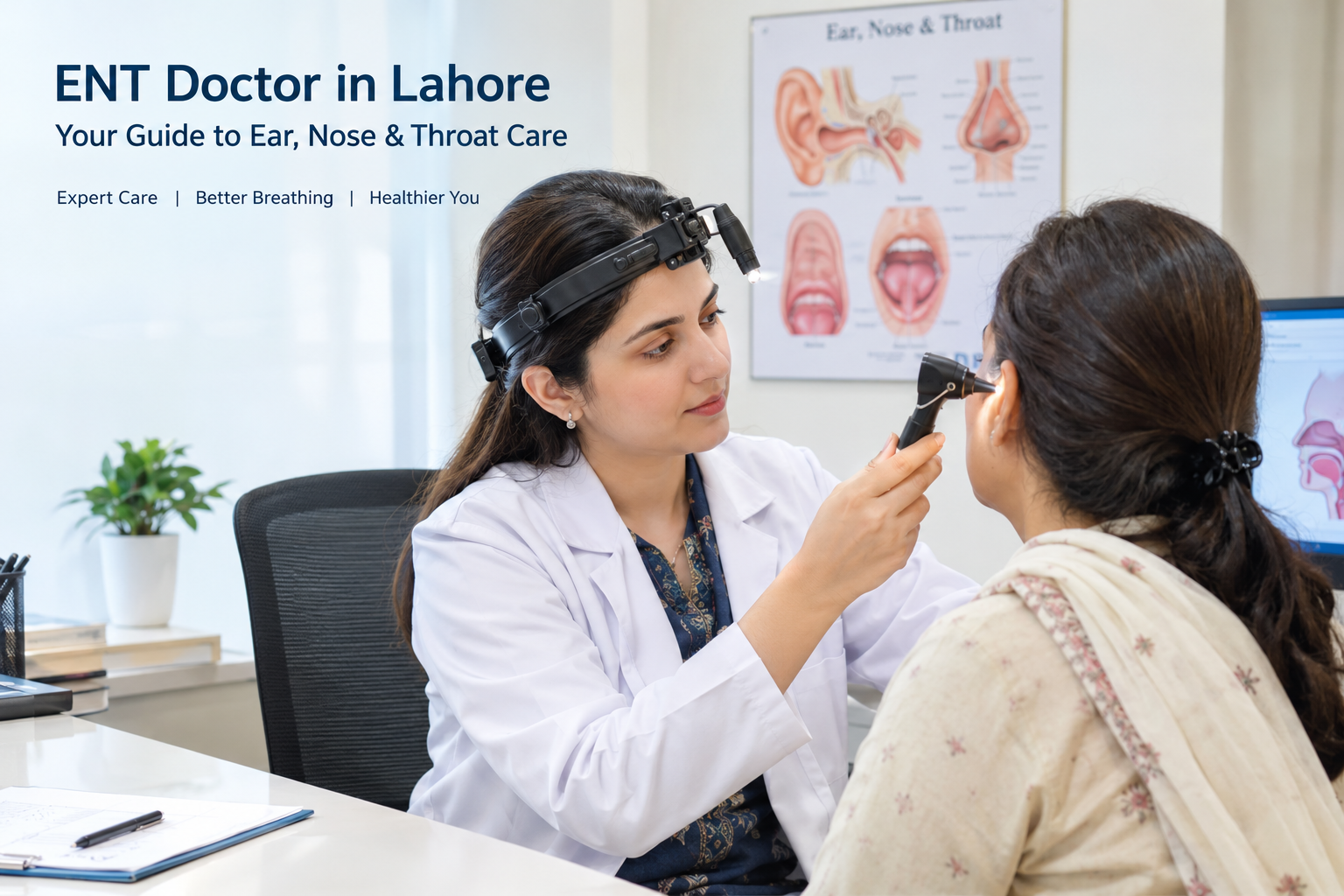
ENT Specialist Doctor in Lahore: A Guide to Ear, Nose and Throat Care
Find an ENT doctor in Lahore for ear pain, hearing concerns, sinus problems and throat symptoms. Learn when to consult an ENT specialist.
Finding the right ENT doctor in Lahore can help with issues like ear pain, hearing loss, nasal congestion, sinus problems, and throat infections. They can guide you in understanding these conditions better. These symptoms are common. Their causes can vary. That’s why getting a proper medical assessment is important.
An ENT specialist, or otolaryngologist, examines issues with the ears, nose, throat, and related areas of the head and neck.
An ENT consultation may include these steps based on your symptoms:
Medical history
Physical examination
Hearing assessment
Other tests
Patients in Johar Town and nearby Lahore can find Dr. Zahra Aleem. She is an ENT specialist at Lahore Oncology Center. Patients should check the clinic schedule, services, and appointment availability before visiting.
This guide covers common ENT conditions. It explains when to see a specialist, what happens during an appointment, and how to get ready for your visit.
What Does an ENT Doctor Treat?
An ENT doctor checks for issues in the ears, nose, throat, and parts of the head and neck. Some issues can be handled with medication or practical tips. Others need specialist tests, procedures, or a referral to another healthcare provider.
Common reasons to consult an ENT specialist include:
Ear pain, discharge or recurring ear infections
Earwax buildup and sensations of blocked ears
Hearing difficulties or ringing in the ears
Persistent nasal congestion and allergies
Recurrent sinus problems
Repeated tonsil or throat infections
Voice changes or persistent hoarseness
Nasal polyps or structural nasal blockage
Neck lumps or swellings requiring assessment
The right treatment depends on the cause of the symptoms. It also depends on how long the symptoms last, the patient’s history, and what the exam shows. Not every earache, sore throat or blocked nose requires surgery or antibiotics.
Common ENT Problems That May Need Medical Attention
1. Ear Pain and Ear Infections
Ear pain can come from several causes. These include:
Ear infections
Inflammation in the ear canal
Earwax buildup
Issues with nearby areas like the jaw and throat.
Symptoms may include discomfort, itching, discharge, a blocked sensation or changes in hearing. A doctor can check the ear to find possible causes. This helps us decide if we need treatment or more tests.
Avoid inserting cotton buds, hairpins or other objects into the ear canal. These can irritate the skin, push wax deeper or cause injury.
Get medical help right away if your ear pain is severe. Also, see a doctor if you notice swelling around the ear or have major changes in hearing. Other worrying symptoms need attention too.
2. Hearing Loss and Ringing in the Ears
Hearing difficulties may develop gradually or occur suddenly.
Possible causes are:
Earwax
Infection
Damage to the hearing system
Other medical conditions
Tinnitus is hearing sounds like ringing, buzzing, or humming. These noises come without any outside source. It can occur alongside hearing loss, and it has several possible causes.
A specialist might suggest an ear exam and a hearing test based on the symptoms.
Sudden hearing loss requires urgent medical assessment. Don't wait for a routine appointment to get care. Some issues need timely attention.
3. Sinusitis and Nasal Congestion
Sinusitis is inflammation of the sinuses. This can cause a blocked nose, face pressure, less smell, nasal discharge, or headaches.
Allergies, viral infections and other conditions can also contribute to persistent nasal symptoms. Treatment depends on the underlying cause and severity.
Consult a doctor if symptoms are severe, recur often, worsen after they improve, or fail to improve as expected. An ENT specialist can check ongoing or complex symptoms. They will decide if more treatment is needed.
For more information, read the NHS guide to sinusitis.
4. Allergic Rhinitis and Nasal Allergies
Allergic rhinitis can lead to sneezing, a runny or blocked nose, and itchy, watery eyes. Dust, pollen, mold and other allergens may trigger symptoms in susceptible individuals.
In Lahore, symptoms can change with the environment, dust, or the season. Nasal symptoms shouldn't just be blamed on allergies. It's important to think about other possible causes too.
A healthcare professional can help assess recurring symptoms and recommend suitable management. Treatment may include avoiding relevant triggers and using appropriate medicines when indicated.
Don't use nasal decongestant sprays for too long without a doctor's advice. Some sprays can make congestion worse if you overuse them.
5. Tonsillitis and Recurrent Throat Infections
Tonsillitis is when the tonsils swell up. This can lead to a sore throat, pain when swallowing, fever, and swollen neck glands.
Many sore throats improve without antibiotics, particularly when caused by viruses. Antibiotics should be used only in certain cases. They are fitting when a bacterial infection is suspected or confirmed by a clinical check.
A medical review is advisable for recurrent infections, persistent symptoms or difficulty swallowing.
Get emergency care if you have trouble breathing, can't swallow saliva, or if your throat swelling gets worse quickly.
6. Voice Changes and Persistent Hoarseness
Hoarseness may occur after a respiratory infection, from vocal strain, irritation, or other issues with the voice box.
Resting the voice and maintaining adequate hydration may help some minor cases. Don't ignore ongoing or unclear voice changes. These can be serious, especially if they come with difficulty swallowing, a lump in your neck, coughing up blood, or unexpected weight loss.
A clinician might suggest checking the throat and voice box. They may also plan more tests based on the symptoms.
7. Neck Lumps and Head-and-Neck Symptoms
Neck lumps can have several causes, including enlarged lymph nodes associated with infection. Some need more checking, especially if they last, grow, or come with other concerning symptoms.
An ENT specialist can check where a lump is, how long it's been there, and what it feels like. They can then decide if tests or a referral are necessary.
Persistent symptoms do not automatically mean cancer. Timely assessment is key. Early investigation helps find the cause and guides proper care.
When Should You Visit an ENT Specialist in Lahore?
Consider booking a medical assessment if you experience:
Recurrent ear infections or ongoing ear discomfort
Persistent nasal blockage or repeated sinus symptoms
Hearing difficulties or continuing tinnitus
Frequent tonsil infections or persistent throat discomfort
Hoarseness that does not resolve
Ongoing nasal bleeding or repeated nosebleeds
A persistent neck lump or unexplained swelling
Some symptoms need more urgent attention. Sudden hearing loss, trouble breathing, uncontrolled bleeding, or fast swelling need immediate attention. Don't wait for a routine clinic visit.
The right time to seek care depends on the symptom and its severity. A general practitioner can also help determine whether specialist assessment is necessary.
Meet Dr. Zahra Aleem, ENT Specialist in Lahore
Patients looking for an ENT specialist in Lahore can consider Dr. Zahra Aleem. She is listed as an ENT specialist in Johar Town in various medical directories and local business sites.
Her public practice is linked to Chughtai Medical Centre. It’s located near Khokhar Chowk in Johar Town, Lahore. Patients who want to consult her should contact the clinic. They can check her availability, qualifications, consultation details, and services offered.
Before choosing a specialist, think about these points:
Does the clinician often handle your specific issue?
Are the necessary diagnostic tools available?
Do you understand the suggested assessment and treatment plan?
It's helpful to bring your past prescriptions, hearing-test results, and investigation reports. Also, include a list of your current medicines.
Editorial note: Check Dr. Zahra Aleem's credentials, practice location, services, and appointment details against a trusted professional profile before publishing this section.
What Happens During an ENT Consultation?
An ENT consultation starts with questions about your symptoms. They’ll ask when your symptoms began, how often they happen, and if anything helps or worsens them.
Depending on your concern, the assessment may include:
Medical history: Your doctor will ask about your symptoms, past illnesses, any medications you take, allergies, and other key health details.
Physical examination: Your ears, nose, throat, or neck will be checked based on your symptoms.
Further testing: Hearing tests, endoscopic exams, imaging, or lab tests may be done if needed.
Treatment discussion: The doctor explains possible causes, treatment options, precautions and follow-up requirements.
Not every patient needs every test. Choose investigations based on the findings and the clinical question at hand.
Before you leave, ask:
What symptoms need urgent review?
How should I use my prescribed medicine?
When should I return if my condition doesn't improve?
How to Prepare for Your ENT Appointment
A little preparation can make your consultation more productive.
Write down your main symptoms and when they began.
Note whether the problem affects one ear or both, one side of the nose or both, or your throat, voice, or both.
Bring previous prescriptions, reports and relevant medical records.
Tell the doctor about allergies and all medicines you use.
Mention previous ENT procedures or surgery.
Prepare questions about diagnosis, treatment options, potential side effects and follow-up.
If you are booking for a child, describe any changes in hearing, speech, sleep, feeding or recurrent infections that concern you.
Do not start antibiotics or use prescription ear or nasal medicines without appropriate medical advice.
Why Local Access to ENT Care Matters
Choosing a qualified ENT doctor close to home or work makes visits easier.
Patients in Johar Town, Lahore, should confirm the clinic's address, hours, appointment process, and diagnostic services before they go.
Local convenience is only one consideration. The clinician's relevant qualifications, the nature of your symptoms and access to appropriate investigations should also guide your choice.
For patients who may need assessment for a head-and-neck condition, it is especially important to explain persistent symptoms clearly and follow the recommended investigation or referral plan.
Frequently Asked Questions About ENT Doctors in Lahore
1. What does ENT stand for?
ENT stands for ear, nose and throat. The medical specialty is also called otolaryngology and covers a range of conditions affecting these areas and related structures of the head and neck.
2. When should I see an ENT doctor in Lahore?
Consider a consultation for persistent or recurrent ear pain, hearing problems, nasal blockage, sinus symptoms, throat infections, voice changes or other ongoing ENT concerns. Seek urgent assessment for sudden hearing loss, breathing difficulties or other emergency symptoms.
3. What is the difference between an ENT doctor and an ENT specialist?
The terms are commonly used interchangeably. An ENT specialist is a doctor with appropriate specialist training in otolaryngology. Check the clinician's verified qualifications and registration when selecting a provider.
4. Can an ENT specialist treat sinusitis?
Yes. ENT specialists assess sinus problems, particularly when symptoms are persistent, recurrent, severe or complicated. Treatment depends on the cause and may involve medication, further investigations or, in selected cases, surgery.
5. Should I see a doctor for recurring earwax buildup?
Yes, especially if your ear feels blocked. If your hearing changes, or you have pain or discharge, it’s important to pay attention. Avoid putting objects inside the ear. A clinician can check for wax and suggest the best removal method.
6. Is sudden hearing loss an emergency?
Sudden hearing loss should receive urgent medical assessment. Do not assume it is simply earwax or wait for a routine appointment.
7. Where can I consult Dr. Zahra Aleem in Lahore?
Dr. Zahra Aleem is linked to Chughtai Medical Centre. It’s located near Khokhar Chowk in Johar Town, Lahore. Confirm the current address, clinic timings and appointment availability directly before visiting.
8. What should I bring to an ENT appointment?
Please bring your past medical reports, prescriptions, and any hearing test results. Also, include a list of your current medicines and a short record of your symptoms. These details can help the clinician assess your concern.
Book an ENT Consultation in Lahore
Persistent ear, nose or throat symptoms deserve appropriate medical attention. An assessment can help find potential causes. It also guides the next steps for diagnosis, treatment, or referral.
If you want to see Dr. Zahra Aleem for an ENT consultation, reach out to her clinic. They can confirm appointment availability and the services they provide.
Arrange a consultation: Reach out to the clinic to confirm the appointment process and times before you travel.
Medical disclaimer: This article provides general educational information and does not replace a professional medical consultation, diagnosis or treatment. Seek urgent medical care for emergency symptoms.